

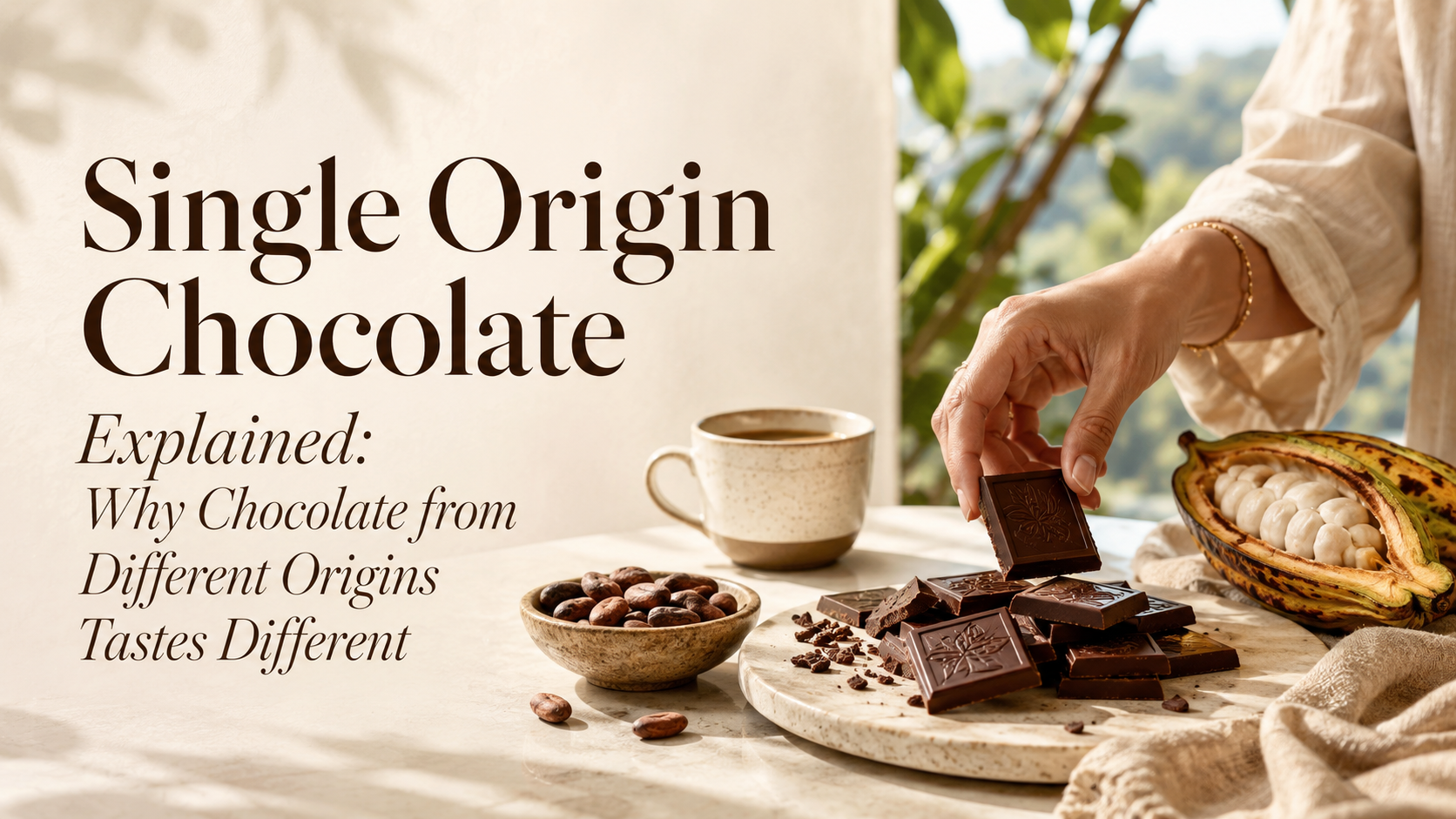
Discover what single origin chocolate is, why cacao origin matters, and how climate, soil, and farming practices create unique chocolate flavour profiles around the world.
Single Origin Chocolate Explained: Why Chocolate from Different Origins Tastes Different
Introduction
Wine lovers often talk about the importance of where grapes are grown. Coffee enthusiasts discuss the unique flavours of beans from Ethiopia, Colombia, or Brazil.
Chocolate is no different.
The flavour of chocolate begins long before the manufacturing process—it starts at the cacao farm. The region where cacao is grown has a profound influence on its taste, aroma, and character.
This is why single origin chocolate has become increasingly popular among chocolate enthusiasts who want to experience the true personality of cacao.
But what exactly does "single origin" mean, and why does it matter?
What Is Single Origin Chocolate?
Single origin chocolate is made using cacao beans sourced from one specific country, region, or even a single farm.
Unlike blended chocolate, which combines beans from multiple origins to create a consistent flavour, single origin chocolate celebrates the natural characteristics of one particular location.
This allows consumers to appreciate the distinctive flavour profile that comes from a specific terroir.
What Is Terroir?
The term terroir originated in the wine industry but is equally important in chocolate.
Terroir refers to the environmental conditions that influence how cacao grows, including:
- Climate
- Rainfall
- Soil composition
- Altitude
- Sunlight
- Local biodiversity
Together, these factors create unique flavour characteristics that cannot be replicated elsewhere.
Why Do Different Origins Taste Different?
Even when two chocolate bars contain the same cocoa percentage, they may taste completely different.
This is because flavour develops naturally from the cacao itself.
For example:
Fruity Notes
Some origins produce chocolate with flavours similar to:
- berries
- cherries
- tropical fruits
Nutty Notes
Other regions naturally develop flavours such as:
- almonds
- hazelnuts
- roasted peanuts
Floral Notes
Certain cacao varieties may express delicate aromas reminiscent of:
- jasmine
- honey
- wildflowers
Rich Chocolate Notes
Some origins are known for:
- caramel
- roasted cocoa
- malt
- deep chocolate intensity
These tasting notes are naturally occurring and are not added as flavourings.
Does Higher Cocoa Percentage Mean Better Chocolate?
Not necessarily.
A well-crafted 70% chocolate made from exceptional cacao may offer a more enjoyable tasting experience than a poorly made 85% chocolate.
Quality depends on many factors, including:
- Cacao genetics
- Farming practices
- Fermentation
- Roasting
- Chocolate making techniques
Origin is one important piece of the puzzle.
Why Chocolate Makers Value Single Origin Beans
Working with a single origin allows chocolate makers to highlight the natural beauty of the cacao rather than masking it.
This approach also encourages:
- Better traceability
- Stronger relationships with farmers
- Greater transparency
- More sustainable sourcing
Consumers increasingly appreciate knowing where their food comes from, and chocolate is no exception.
How to Taste Single Origin Chocolate
The best way to experience single origin chocolate is to slow down and taste it intentionally.
Step 1
Look at the chocolate.
A well-tempered chocolate should have a glossy surface and a clean finish.
Step 2
Break the chocolate.
Listen for a crisp snap, which indicates proper tempering.
Step 3
Smell the aroma.
Before tasting, notice the chocolate's natural fragrance.
Step 4
Let it melt slowly.
Avoid chewing immediately.
Allow the chocolate to melt on your tongue so the flavour develops gradually.
Step 5
Notice the finish.
Many premium chocolates continue evolving for several seconds after swallowing.
You may discover new flavour notes as the chocolate lingers.
The Growing Reputation of Malaysian Cacao
Malaysia has a long history of cacao cultivation and is increasingly recognised for producing high-quality beans suitable for premium chocolate.
With careful farming, fermentation, and chocolate making, Malaysian cacao can express balanced flavour profiles that appeal to both everyday chocolate lovers and craft chocolate enthusiasts.
As consumers become more interested in transparency and origin, Malaysian chocolate has an exciting opportunity to gain greater recognition on the global stage.
Why Origin Matters to Vive Chocolate
At Vive Chocolate, we believe that exceptional chocolate starts with exceptional cacao.
Understanding where cacao comes from helps us appreciate not only its flavour but also the dedication of the farmers who cultivate it.
By focusing on quality ingredients and careful craftsmanship, we aim to let the natural character of cacao shine through in every chocolate bar we create.
Final Thoughts
Single origin chocolate is more than a trend—it's a celebration of cacao's diversity.
Every region produces beans with its own personality, shaped by nature and refined through skilled farming and chocolate making.
The next time you enjoy a piece of chocolate, take a moment to consider where its journey began. You may discover that origin is one of the most fascinating ingredients of all.