

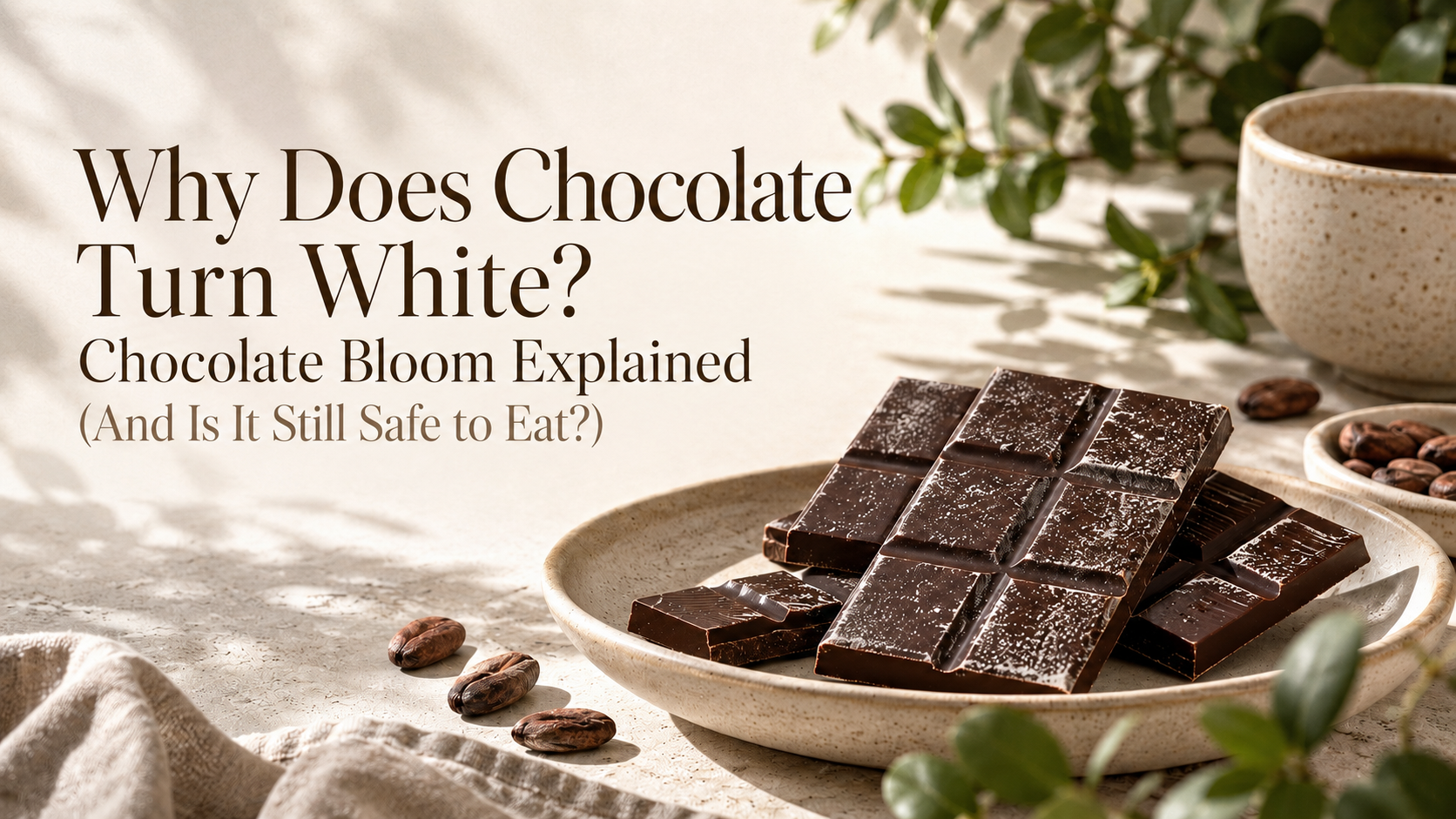
Wondering why chocolate turns white? Learn the difference between fat bloom and sugar bloom, what causes chocolate bloom, and whether white chocolate bloom is still safe to eat.
You unwrap your favourite chocolate bar, ready to enjoy it, only to notice a strange white or grey coating on the surface.
Has it gone bad?
Is it mould?
Should you throw it away?
The good news is that, in most cases, the answer is no.
What you're seeing is called chocolate bloom—a common and completely natural phenomenon that affects many chocolate products. While bloom may change the appearance and texture of chocolate, it doesn't necessarily mean the chocolate is unsafe to eat.
Let's explore why chocolate turns white, the different types of bloom, and how you can prevent it from happening.
What Is Chocolate Bloom?
Chocolate bloom is a visible white or greyish layer that forms on the surface of chocolate.
It happens when the chocolate's ingredients become unstable due to changes in temperature or humidity.
There are two main types of chocolate bloom:
- Fat Bloom
- Sugar Bloom
Although they may look similar, they happen for different reasons.
1. Fat Bloom
Fat bloom is the most common type of chocolate bloom.
It occurs when cocoa butter crystals inside the chocolate melt slightly and then recrystallise on the surface.
This creates a pale, cloudy appearance.
Common causes of fat bloom include:
- Storing chocolate in a warm place
- Frequent temperature changes
- Chocolate melting and cooling repeatedly
- Poor tempering during production
Fat bloom is especially common in hot and humid climates like Malaysia.
2. Sugar Bloom
Sugar bloom happens when moisture comes into contact with the chocolate.
Water dissolves the sugar on the surface.
As the moisture evaporates, the sugar recrystallises, leaving behind a rough, white coating.
Sugar bloom is often caused by:
- Refrigerating chocolate without proper packaging
- Condensation after taking chocolate out of the fridge
- High humidity
Unlike fat bloom, sugar bloom usually feels rough or grainy.
Is Chocolate Bloom Safe to Eat?
Yes.
If the chocolate has simply developed fat bloom or sugar bloom, it is generally still safe to eat, provided it has been stored properly and has not exceeded its shelf life.
Bloom affects:
- Appearance
- Texture
- Mouthfeel
However, it does not automatically mean the chocolate has spoiled.
If you notice signs such as mould, an unusual smell, or an off taste, it is best not to consume the product.
Does Bloom Affect Taste?
Chocolate bloom doesn't usually change the basic flavour of the chocolate.
However, it can affect the eating experience.
Bloomed chocolate may:
- lose its glossy finish
- feel slightly dry
- become crumbly
- melt less smoothly in your mouth
Premium chocolate is carefully tempered to achieve a shiny finish and a satisfying snap, so bloom can reduce some of these desirable qualities.
How to Prevent Chocolate Bloom
Proper storage is the best way to keep chocolate looking and tasting its best.
Here are a few simple tips:
Store chocolate at a stable temperature
The ideal storage temperature is around 16–20°C.
Avoid placing chocolate near ovens, windows, or inside a hot car.
Keep it dry
Humidity is one of chocolate's biggest enemies.
Store chocolate in an airtight container if you live in a humid environment.
Avoid frequent temperature changes
Repeatedly moving chocolate between warm and cold environments encourages bloom to develop.
Don't refrigerate unless necessary
While refrigeration may seem like a good idea, it often causes condensation when the chocolate is removed.
If refrigeration is unavoidable, seal the chocolate in an airtight bag before placing it inside the fridge.
Why Premium Chocolate Can Still Bloom
Some people assume that chocolate bloom only happens to low-quality chocolate.
In reality, even premium bean-to-bar chocolate can bloom if it is exposed to unsuitable storage conditions.
Craft chocolate often contains:
- natural cocoa butter
- fewer additives
- minimal stabilisers
This allows the true flavour of cacao to shine—but it also means proper storage is even more important.
How Vive Chocolate Preserves Quality
At Vive Chocolate, every chocolate bar is carefully crafted using quality ingredients and proper tempering techniques to achieve a smooth texture, glossy finish, and satisfying snap.
To enjoy the best flavour and texture, we recommend storing your chocolate in a cool, dry place away from direct sunlight and excessive heat.
With proper storage, you can enjoy the rich character of Malaysian cacao exactly as intended.
Final Thoughts
A white coating on chocolate may look alarming, but it is usually nothing more than chocolate bloom.
Understanding the difference between fat bloom and sugar bloom helps you make informed decisions instead of throwing away perfectly edible chocolate.
The next time you notice your chocolate turning white, you'll know that it's often a matter of storage—not safety.
With a few simple storage habits, you can keep your chocolate looking beautiful and tasting its very best.